
Dashboard / River / River Dart at Newbridge
River Dart at Newbridge
A wide, shingle-bedded bend of the Dart where a medieval bridge pins the flow into a long, slow pool — the most forgiving river entry in the Dartmoor ring.
Monthly water temperature temperature
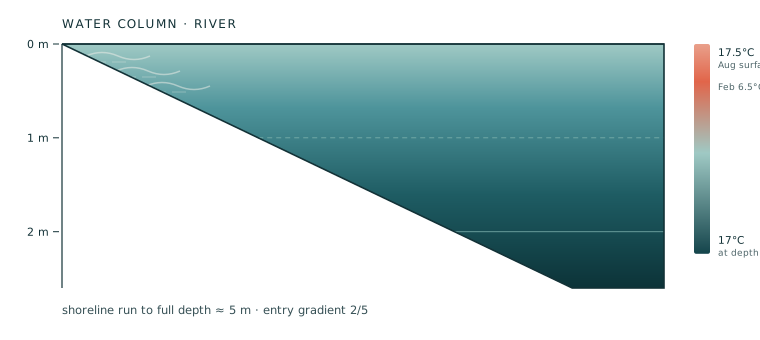
The surface runs about 17.5 °C in August. The annual low is 6.5 °C in January and the high is 17.5 °C in July. No pronounced summer thermocline is recorded here. For October, the mean surface figure is 12.5 °C.
| Jan | Feb | Mar | Apr | May | Jun | Jul | Aug | Sep | Oct | Nov | Dec |
|---|---|---|---|---|---|---|---|---|---|---|---|
| 6.5 | 6.5 | 7.5 | 9.5 | 12.5 | 15.5 | 17.5 | 17.5 | 15.5 | 12.5 | 9.5 | 7.5 |
Safety safety
The Dart above Buckfastleigh is a designated bathing water. Environment Agency sampling at Newbridge has returned 'Excellent' every season since 2019; the main variable is agricultural run-off after heavy rain, so check the EA bathing-water page before setting out.
Safety notes (3)
- After rain the Dart rises fast: the gauge at Austins Bridge can climb 400 mm in an hour. Do not enter when the water is peaty-brown with visible surface chop.
- The bridge arch creates a recirculating eddy on the downstream face; swim the pool, not the arch.
- Weil's disease (leptospirosis) is present in UK rodent-heavy riverbanks. Cover any cut with a waterproof plaster and report flu-like symptoms to a GP within two weeks.
Where to get in
- Shingle beach ramp — Directly downstream of the bridge on the left bank; firm underfoot, no step down.
- Pontoon-free rock shelf — Upstream right bank; flat granite slab that dries within an hour of the rain stopping.
On site
- Pay-and-display parking with card reader
- Two benches and a picnic table at the bridge head
- No toilets, no bins — pack everything out
Getting there arrival · entry · exit
Getting there
The Newbridge car park sits on the Holne side of the bridge, four minutes' walk from the shingle. Take the riverside path downstream rather than the road — it drops you at the widest part of the pool, where the flow fans out and the bottom is visible to about 1.5 m.
Come in the morning. By 11:00 on a warm Saturday the pool carries twenty-odd swimmers and the parking fills; before 09:00 you will usually have the whole bend to yourself, and the water is at its stillest because the overnight release from Dartmoor reservoirs has not yet arrived.
Getting in
Walk in rather than jump. The shelf is ankle-deep for the first two metres, then drops to chest depth in a single step. On a July afternoon the shallows read 18 °C but the main channel is closer to 16 °C — the difference is enough to make you gasp if you plunge straight in.
Face upstream for the first thirty seconds and let the current take you back to your entry point; it is a gentle 0.3 m/s at summer levels, which is slow enough to swim against but fast enough that you notice it. Once your breathing has settled, cross to the far bank and back — roughly 40 m each way.
Getting out
Exit at the same shingle ramp. The gravel is loose at the waterline, so keep three points of contact and step sideways rather than climbing straight up.
Dry off and dress on the grass above the flood line, not on the beach — the Dart can put 300 mm of water over the lower shingle within twenty minutes of rain starting on the moor, and it does not look dramatic when it happens.
Depth profile
A stepped shelf drops from ankle depth to about 1.2 m within three metres of the bank, then shelves gently to a flat 2.4–2.6 m gravel bed across the middle. The deepest line runs directly under the bridge arch, where the summer flow is slow enough to swim against.
Season window
Mid-May to mid-October; the bed is cleanest June–September
Cold-water questions
- Is the River Dart clean enough to swim in?
- The stretch above Buckfastleigh is a designated bathing water and has been classed Excellent since 2019. Avoid the 48 hours after heavy rain, when run-off pushes bacteria counts up.
- How cold is the Dart in summer?
- Roughly 17–18 °C in July and August at the surface, dropping to 15–16 °C in the main channel because the water is released from the bottom of Dartmoor reservoirs.
Before you get in
Cold water is the one hazard that applies everywhere in this library. Below 15 °C the gasp reflex can make you inhale water involuntarily within seconds of immersion; below 10 °C, unacclimatised swimmers lose the ability to swim effectively within minutes. Enter gradually, keep your first session under five minutes, never swim alone, and get out while you still feel fine — the afterdrop continues after you leave the water.
Informational only. Stillwater is not a safety authority, a lifeguard service or a medical source, and nothing here is professional advice. Water conditions change within hours: temperatures are monthly means, not today's reading, and depth profiles are typical rather than surveyed. Before you enter any water, check the current conditions, read the on-site signage, follow the advice of local lifeguards above anything on this page, and if you are unsure of your ability in cold water, do not go in.
Other spots of the same water type
| River Wye at Symonds Yat | Herefordshire / Gloucestershire border, England | 3.5 m | 12.5° October |
| Upper Rhine at Rheinau | Schaffhausen, Switzerland | 6.5 m | 13° October |
| Berounka at Branov | Central Bohemia, Czechia | 2.2 m | 12° October |
| River Wharfe at Grassington | Yorkshire Dales, England | 3 m | 11.5° October |