
Dashboard / Sea / Pomena, Mljet
Pomena, Mljet
A small harbour on the wooded island of Mljet where the sea reaches 25 °C in August and the swim out to the islet of Pomestak takes 12 minutes.
Monthly water temperature temperature
The surface runs about 25 °C in August. The annual low is 12.5 °C in February and the high is 25 °C in August. No pronounced summer thermocline is recorded here. For October, the mean surface figure is 20 °C.
| Jan | Feb | Mar | Apr | May | Jun | Jul | Aug | Sep | Oct | Nov | Dec |
|---|---|---|---|---|---|---|---|---|---|---|---|
| 13.5 | 12.5 | 13 | 15 | 18 | 22 | 24.5 | 25 | 23 | 20 | 17.5 | 15 |
Safety safety
Croatia's bathing-water monitoring under the EU directive gives Mljet's main beaches 'excellent' ratings consistently. The island is a national park with a low population and no industrial discharge, and the strong tidal exchange with the Adriatic keeps the harbour clear.
Safety notes (3)
- Outside the harbour the shore is deep and rock-walled with no easy exit. Plan to return the way you came, and note that the only convenient re-entry is the quay ladders.
- Sea urchins are common on the limestone at 1–3 m. Wear water shoes if you plan to climb out onto rock.
- Summer afternoon wind (the maestral) builds to force 4–5 from about 14:00 and makes the crossing to Pomestak hard work on the return leg.
Where to get in
- Harbour wall ladder — Steel ladders along the western quay, into 3–4 m; the easiest controlled entry.
- Sandy patch beach — Small beach at the south end of the harbour; 10 m of shallow sand, popular with children.
- Rock platform (north) — Flat limestone shelf 150 m north of the harbour with deep water immediately off it.
On site
- Several konobas (taverns) and a small shop on the quay
- Hotel and campsite in the village
- Bicycle hire for the national park lakes, 2 km inland
Getting there arrival · entry · exit
Getting there
Mljet is reached by catamaran from Dubrovnik (1 hour 45 minutes) or by car ferry from Prapratno on the Pelješac peninsula (45 minutes). Pomena is a 10 minute walk from the ferry landing at the western end of the island.
The island has almost no cars and the national park covers most of it. Most visitors swim from the harbour and then cycle inland to the two saltwater lakes, Veliko and Malo Jezero.
Getting in
Use the quay ladders for a straight training swim, or the sandy patch if you want to wade in. In August the water is 25 °C — the warmest sea on this list and comfortable for an hour without a wetsuit.
The classic swim is the crossing to the islet of Pomestak, about 250 m each way. It takes 12 minutes at an easy pace, but the channel is 20 m deep and the afternoon wind turns the return leg into a genuine effort.
Getting out
Return to the quay ladders. Inflatable toys and small boats use the harbour entrance constantly, so cross the harbour close to the wall rather than down the middle.
Freshwater showers are available at the hotel for a small charge; the harbour has no public rinse point.
Depth profile
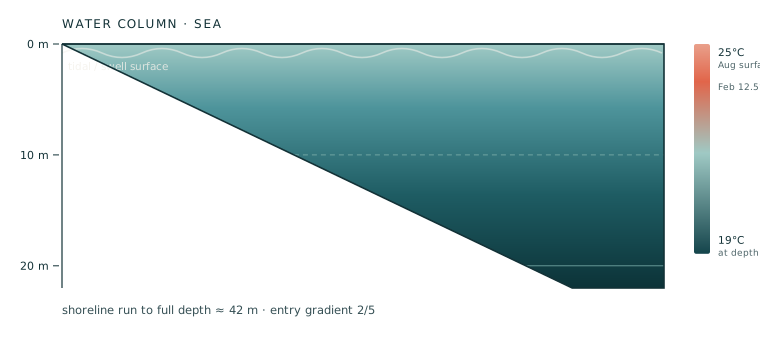
Limestone shore. In the harbour itself a sandy patch reaches 1.5 m at 10 m out and 4 m at the harbour mouth, then falls to 22 m in the channel between Pomena and Pomestak. Outside the harbour there is almost no shallow water — the limestone drops vertically into 8–15 m within a few metres of shore.
Season window
May to October; the season is long because the Adriatic is shallow and warms early
Cold-water questions
- How warm is the sea at Mljet?
- About 25 °C in August and still 20 °C in October. The Adriatic is shallow and warms earlier in the year than the Atlantic coasts on this list.
- Can you swim from Pomena to the island of Pomestak?
- Yes, it is about 250 m each way over water up to 20 m deep. It is a reasonable swim for a competent open-water swimmer, but go in the morning before the maestral builds.
Before you get in
Cold water is the one hazard that applies everywhere in this library. Below 15 °C the gasp reflex can make you inhale water involuntarily within seconds of immersion; below 10 °C, unacclimatised swimmers lose the ability to swim effectively within minutes. Enter gradually, keep your first session under five minutes, never swim alone, and get out while you still feel fine — the afterdrop continues after you leave the water.
Informational only. Stillwater is not a safety authority, a lifeguard service or a medical source, and nothing here is professional advice. Water conditions change within hours: temperatures are monthly means, not today's reading, and depth profiles are typical rather than surveyed. Before you enter any water, check the current conditions, read the on-site signage, follow the advice of local lifeguards above anything on this page, and if you are unsure of your ability in cold water, do not go in.
Other spots of the same water type
| Bude Sea Pool | Cornwall, England | 3.4 m | 14.5° October |
| The Forty Foot, Sandycove | County Dublin, Ireland | 6 m | 14° October |