
Dashboard / Sea / The Forty Foot, Sandycove
The Forty Foot, Sandycove
A granite bathing place at the tip of a Dublin headland, swum from year-round since 1740, immortalised in Ulysses, and still the benchmark for cold-water swimming in Ireland.
Monthly water temperature temperature
The surface runs about 16 °C in August. The annual low is 8.5 °C in February and the high is 16 °C in August. No pronounced summer thermocline is recorded here. For October, the mean surface figure is 14 °C.
| Jan | Feb | Mar | Apr | May | Jun | Jul | Aug | Sep | Oct | Nov | Dec |
|---|---|---|---|---|---|---|---|---|---|---|---|
| 9 | 8.5 | 8.5 | 9.5 | 11.5 | 14 | 15.5 | 16 | 15.5 | 14 | 12 | 10 |
Safety safety
A designated bathing water sampled by Dublin City Council through the season; it sits at the mouth of Dublin Bay and is affected by storm overflows after heavy rain, so avoid 48 hours after a downpour.
Safety notes (3)
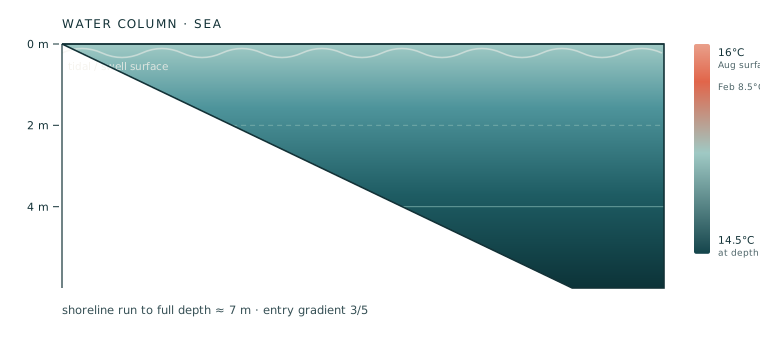
- There is no gradual entry from the platform. If you cannot swim confidently in 6 m of cold water, use the ladder.
- Winter water is 8–9 °C. Limit winter dips to 5–8 minutes and never swim alone between November and March.
- The bathing place faces south-east and takes swell directly in an easterly. In a force 5 easterly the platform is washed over and the club closes the ladder.
Where to get in
- Club ladder — Steel ladder on the north face; the standard controlled entry, submerged to about 1 m.
- Platform jump — The 1.5 m jump into 4 m of clear water is the tradition. Check for swimmers below before you commit — the take-off is blind at high water.
- Shelving corner (south) — Sloped rock entry for those who do not want to jump; slippery in wet weather.
On site
- Outdoor cold showers and toilets at the entrance (open 06:00–24:00)
- Sheltered changing area behind the sea wall
- Sandycove village, with a pub and a coffee kiosk, 8 minutes' walk
Getting there arrival · entry · exit
Getting there
Take the DART to Sandycove and Glasthule, then walk 8 minutes east along the coast past the Martello tower. By car, park in Sandycove village and walk down — the Forty Foot has no car park of its own.
The place is busiest at 07:00, when the year-round morning swimmers go in. Join them if you want company; the regulars are welcoming and will tell you the current conditions better than any forecast.
Getting in
If you are new, use the ladder. It puts you in 6 m of water gently and is the only entry that lets you get your breathing under control before you commit.
If you jump, count to three and go, and swim out immediately — the wall is where other jumpers land. The water is 16 °C in August and 8 °C in February, and the shock on a winter jump is severe enough to make some people hyperventilate for 30 seconds.
Getting out
Swim to the ladder and climb out. In winter, do not linger on the platform — wind chill at 8 °C water temperature makes the exposed granite a genuinely dangerous place to stand around wet.
Showers at the entrance are cold. Dress in the sheltered changing area and then walk to the village for coffee; the 8-minute walk is what actually warms you up.
Depth profile
Deep water immediately. The granite platform ends in a 1.5 m drop straight into 4–6 m of water, which is why this is a jumping spot rather than a wading one. There is a shelving corner on the south side used by people who prefer to climb in, and a ladder installed by the local swimming club.
Season window
All year; the Christmas Day swim is the busiest hour of the year
Cold-water questions
- How cold is the Forty Foot in winter?
- 8–9 °C from January to March. Regular swimmers stay in for 5–10 minutes; beyond that, core temperature starts to fall faster than most people expect.
- Do you need to be a member to swim at the Forty Foot?
- No. It is a public bathing place open all year and free to enter. The local club maintains the ladder and organizes the Christmas Day swim but does not control access.
Before you get in
Cold water is the one hazard that applies everywhere in this library. Below 15 °C the gasp reflex can make you inhale water involuntarily within seconds of immersion; below 10 °C, unacclimatised swimmers lose the ability to swim effectively within minutes. Enter gradually, keep your first session under five minutes, never swim alone, and get out while you still feel fine — the afterdrop continues after you leave the water.
Informational only. Stillwater is not a safety authority, a lifeguard service or a medical source, and nothing here is professional advice. Water conditions change within hours: temperatures are monthly means, not today's reading, and depth profiles are typical rather than surveyed. Before you enter any water, check the current conditions, read the on-site signage, follow the advice of local lifeguards above anything on this page, and if you are unsure of your ability in cold water, do not go in.
Other spots of the same water type
| Bude Sea Pool | Cornwall, England | 3.4 m | 14.5° October |
| Pomena, Mljet | Dalmatia, Croatia | 22 m | 20° October |