
Dashboard / Sea / Kvalvika Beach, Lofoten
Kvalvika Beach, Lofoten
A white-sand Arctic beach reached only by a 40 minute mountain path, enclosed by 500 m peaks, with water at 12–13 °C in August — cold enough that most visitors wade rather than swim.
Monthly water temperature temperature
The surface runs about 12.5 °C in August. The annual low is 4 °C in February and the high is 12.5 °C in August. No pronounced summer thermocline is recorded here. For October, the mean surface figure is 9 °C.
| Jan | Feb | Mar | Apr | May | Jun | Jul | Aug | Sep | Oct | Nov | Dec |
|---|---|---|---|---|---|---|---|---|---|---|---|
| 4.5 | 4 | 4 | 5 | 7 | 9.5 | 11.5 | 12.5 | 11 | 9 | 7 | 5.5 |
Safety safety
Among the cleanest seawater in Europe by any measure — no industry, no agriculture, and a population of essentially zero in the catchment. The Norwegian Institute for Water Research classes the outer Lofoten shores as 'very good' for bathing, and the only true concern is temperature.
Safety notes (3)
- This is an Arctic beach with no rescue service nearby. Norwegian rescue helicopter response is measured in tens of minutes, and mobile coverage at the beach is patchy.
- Water at 12 °C in August causes rapid cooling. For anyone without cold-water experience, 10 minutes is a long swim here.
- The beach is exposed to any north-westerly swell. Waves arriving here have crossed 2,000 km of open ocean and carry real power.
Where to get in
- Sandy beach slope — The whole length of the beach gives a walk-in entry; firm sand, no rocks, no weed.
- Stream mouth (north end) — Cold stream inflow; shallower sand but noticeably colder water than elsewhere on the beach.
On site
- None. No toilets, no bins, no water — pack everything in and out
- Emergency shelter (open) at the eastern end of the beach
- Nearest facilities are 8 km away in Fredvang
Getting there arrival · entry · exit
Getting there
From the E10 between Ramberg and Fredvang, park at the Innerpollen lay-by and follow the marked path over the shoulder of Moltinden. It climbs about 180 m in 1.5 km, then descends steeply to the beach: 40 minutes with a pack, and genuinely rough in the wet.
This is a hike with a swim at the end, not a beach trip. Wear proper boots, carry water, and treat the swim as a bonus.
Getting in
Walk into the surf zone slowly. At 12 °C the first thirty seconds are the hardest; keep your hands out of the water and let your feet and legs acclimatise before you commit to swimming.
If you do swim, keep it short and parallel to the beach. Ten minutes at 12 °C is a sensible maximum for an unacclimatised swimmer, and the water is 8 m deep only 50 m out.
Getting out
Walk out over sand anywhere along the beach. There is no surf hazard to negotiate and no rip, because the beach has no headlands to generate one.
Change fast. Lofoten's air temperature even in August is commonly 12–14 °C, so there is no sun-warming effect to rely on — and you have a 40 minute walk back with 180 m of descent to reverse.
Depth profile
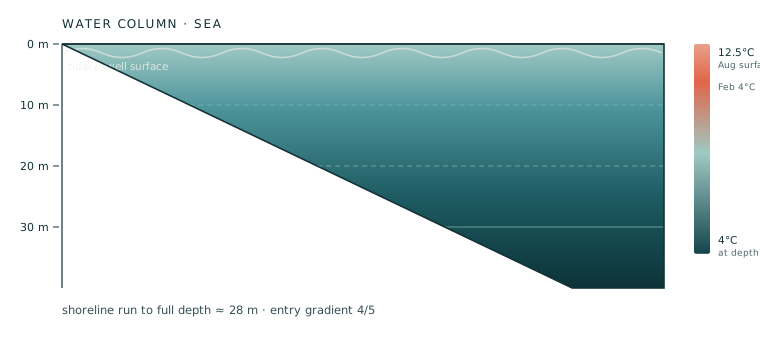
Steep for a beach. A fine white sand shelf reaches 1.5 m about 12 m out, then falls quickly: 8 m at 50 m, 40 m at 400 m. The beach faces north-west into the open Norwegian Sea with no fetch protection from any direction except due south.
Season window
July to early September; outside that the mountain path is a serious undertaking
Cold-water questions
- Is it safe to swim at Kvalvika Beach?
- Yes in summer with a short-dip mindset: no rips, no rocks, clean water, but 12 °C and no nearby rescue service. It suits experienced cold-water swimmers.
- How long is the hike to Kvalvika Beach?
- About 40 minutes each way from the E10 lay-by at Innerpollen, with 180 m of ascent and a steep descent to the sand.
Before you get in
Cold water is the one hazard that applies everywhere in this library. Below 15 °C the gasp reflex can make you inhale water involuntarily within seconds of immersion; below 10 °C, unacclimatised swimmers lose the ability to swim effectively within minutes. Enter gradually, keep your first session under five minutes, never swim alone, and get out while you still feel fine — the afterdrop continues after you leave the water.
Informational only. Stillwater is not a safety authority, a lifeguard service or a medical source, and nothing here is professional advice. Water conditions change within hours: temperatures are monthly means, not today's reading, and depth profiles are typical rather than surveyed. Before you enter any water, check the current conditions, read the on-site signage, follow the advice of local lifeguards above anything on this page, and if you are unsure of your ability in cold water, do not go in.
Other spots of the same water type
| The Forty Foot, Sandycove | County Dublin, Ireland | 6 m | 14° October |
| Bude Sea Pool | Cornwall, England | 3.4 m | 14.5° October |
| Pomena, Mljet | Dalmatia, Croatia | 22 m | 20° October |