
Dashboard / Lake / Loch Morlich
Loch Morlich
A shallow, sandy-bottomed loch at 300 m altitude with a pine-fringed beach — the only place in Britain where you can swim in a Cairngorm loch with a beach that would pass for a coastal one.
Monthly water temperature temperature
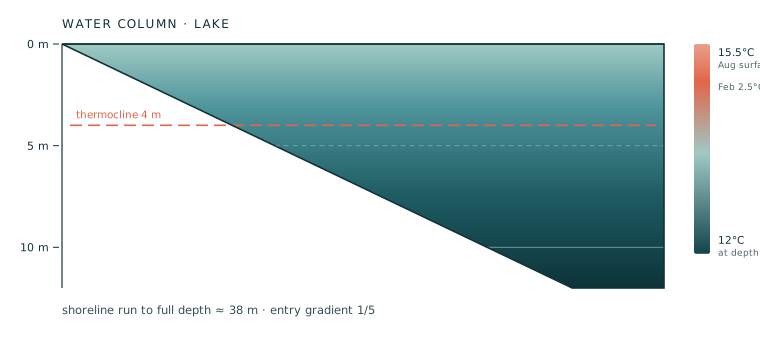
The surface runs about 15.5 °C in August. The annual low is 2.5 °C in January and the high is 15.5 °C in July. The summer thermocline sits at about 4 m, where the temperature drops sharply. For October, the mean surface figure is 10 °C.
| Jan | Feb | Mar | Apr | May | Jun | Jul | Aug | Sep | Oct | Nov | Dec |
|---|---|---|---|---|---|---|---|---|---|---|---|
| 2.5 | 2.5 | 3.5 | 6 | 9.5 | 13 | 15.5 | 15.5 | 13.5 | 10 | 6.5 | 4 |
Safety safety
Designated bathing water under SEPA's Scotland scheme and consistently rated Excellent. The catchment is almost entirely unimproved moorland with no livestock above the beach, which is why the water is clear enough to see the sand at 3 m in still conditions.
Safety notes (3)
- Scottish lochs are cold at depth even in a heatwave. At 15 °C surface you will find 8 °C at 5 m — a two-minute duck dive can turn a comfortable swim into a shivering one.
- Midges: Cairngorm pinewood midges are serious from late June to August. They are worst at dawn and dusk and almost absent in a breeze on open water.
- The loch is a venue for open-water races and triathlon training. On event mornings the swim lane is buoyed off — stay outside it.
Where to get in
- Sandy beach — Main beach at the west end; 60 m of sand at 1:20, walkable well past chest depth.
- Watersports slipway — Concrete slipway at the activity centre, useful when the sand is crowded; keep clear of launching kayaks.
On site
- Cairngorm Lodge youth hostel, 400 m, with drying room
- Café and watersports centre at the beach
- Toilets at the car park; no lifeguard
Getting there arrival · entry · exit
Getting there
Glenmore is 10 minutes from Aviemore on the ski road. The car park is the second one on the right after the hostel; the beach path starts at its north-west corner and takes three minutes through mature pines.
Early morning is the right time with two exceptions: midges are worst then, and the loch holds a morning mist that can keep the air at 6 °C while the water is 14 °C — you will be warmer in the water than out of it.
Getting in
Simply walk in. The sand is firm and clean, and because the gradient is 1:20 you will be 30 m out before you need to swim. Children can stand at chest depth almost anywhere on the main beach.
The classic local swim is a 600 m loop along the beach and back, staying in 1–3 m of water. In August the top metre reaches 16 °C, which makes it one of the few genuinely comfortable freshwater swims in Scotland.
Getting out
Walk out. There is no step and no weed, and the beach dries within minutes of leaving the water when the sun is out.
Get dressed inside the hostel porch or the café if it is raining. Cairngorm weather turns in 20 minutes, and the walk back to the car is exposed.
If you have been in over 20 minutes, expect a 15-minute afterdrop: your core temperature keeps falling after you leave the water. Warm clothes on before the walk, not after.
Depth profile
Unusually gentle for a loch. A sandy shelf reaches 1 m at 12 m out and 2 m at 30 m. The 12 m maximum sits in the northern basin, more than 300 m offshore, so the whole usable swimming area is between 1 and 4 m deep. The thermocline at about 4 m only matters if you swim the basin proper.
Season window
June to early September; snow can return to the surrounding tops in any month
Cold-water questions
- Is Loch Morlich really warm enough to swim without a wetsuit?
- In July and August the top metre reaches 15–16 °C and the beach shelves so gradually that most people swim without one. Outside those months a wetsuit is sensible.
- Where is the deepest part of the loch?
- 12 m, in the northern basin about 300 m offshore. The beach area most people swim in is only 1–4 m deep.
Before you get in
Cold water is the one hazard that applies everywhere in this library. Below 15 °C the gasp reflex can make you inhale water involuntarily within seconds of immersion; below 10 °C, unacclimatised swimmers lose the ability to swim effectively within minutes. Enter gradually, keep your first session under five minutes, never swim alone, and get out while you still feel fine — the afterdrop continues after you leave the water.
Informational only. Stillwater is not a safety authority, a lifeguard service or a medical source, and nothing here is professional advice. Water conditions change within hours: temperatures are monthly means, not today's reading, and depth profiles are typical rather than surveyed. Before you enter any water, check the current conditions, read the on-site signage, follow the advice of local lifeguards above anything on this page, and if you are unsure of your ability in cold water, do not go in.
Other spots of the same water type
| Llyn Idwal | Snowdonia (Eryri), Wales | 12 m | 9° October |
| Buttermere | Lake District, England | 23 m | 11° October |
| Walchensee, Urfeld shore | Bavaria, Germany | 190 m | 13° October |
| Lac d'Annecy, Plage de la Brune | Haute-Savoie, France | 65 m | 14.5° October |